
 INR
 USD
 AED
 EUR

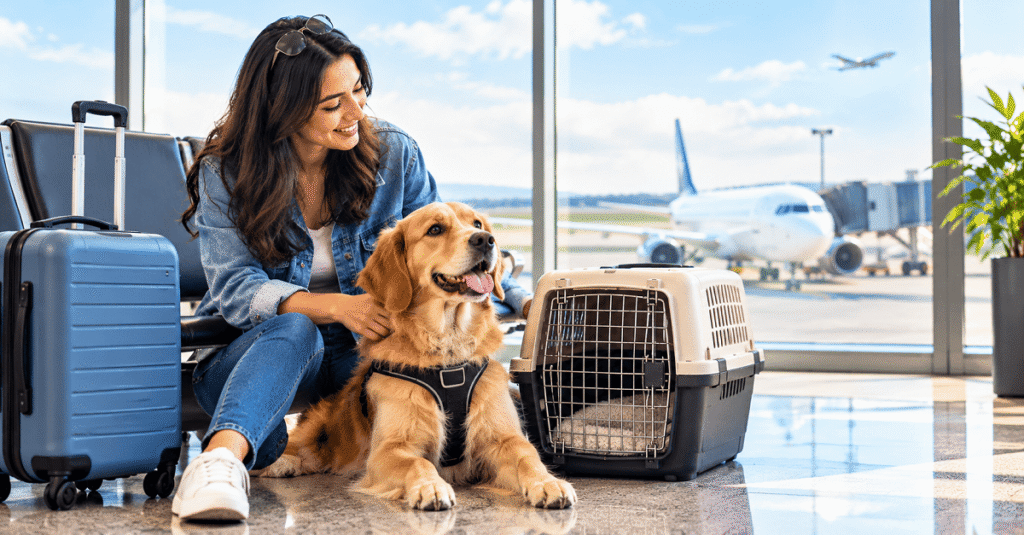
Flying with a pet can be a rewarding experience, but it requires more planning than traveling alone. Airlines have specific rules for pets, and requirements can vary depending on the airline, destination, aircraft, and type of animal.
Whether you’re traveling with a dog or cat, preparing early can help reduce stress and make the journey safer and more comfortable for both you and your pet.
Can You Travel With a Pet on a Flight?
Yes, many airlines allow passengers to travel with pets, but the options available depend on the airline’s policies.
Pets may be allowed:
- In the aircraft cabin
- In an approved carrier transported as checked baggage, where offered
- Through specialized pet transportation or cargo services
Not every airline offers all three options. Some airlines only allow small pets in the cabin, while others have restrictions based on breed, size, age, destination, or aircraft type.
Before booking your ticket, check the airline’s current pet policy and confirm that your specific itinerary is eligible for pet travel.
1. Check the Airline’s Pet Policy Before Booking
Pet travel should be considered before purchasing your flight ticket.
Look for information about:
- Whether pets are allowed in the cabin
- Carrier size and weight limits
- Pet fees
- Number of pets permitted per flight
- Breed or species restrictions
- Temperature-related restrictions
- Required documentation
- International entry requirements
- Reservation requirements
Even if an airline normally accepts pets, it may limit the number of animals allowed on a particular flight.
Tip: After reviewing its pet policy, contact the airline directly if anything is unclear. Getting confirmation before your trip can prevent unpleasant surprises at the airport.
2. Choose the Right Flight
The flight itself can make a significant difference to your pet’s travel experience.
When possible, consider:
- Nonstop flights: Fewer takeoffs, landings, transfers, and handling procedures can make the journey easier.
- Reasonable travel times: A shorter itinerary may reduce the amount of time your pet spends in transit.
- Suitable departure times: Consider your pet’s normal routine and the weather conditions at your departure and arrival locations.
- Fewer connections: Connecting flights can introduce additional airport procedures and potential delays.
If you must take a connecting flight, allow enough time between flights without creating an unnecessarily long travel day.
3. Use an Airline-Approved Pet Carrier
If your pet is traveling in the cabin, the carrier generally needs to meet the airline’s specific size and construction requirements.
Your pet should be able to sit, stand, turn around, and lie down comfortably inside the carrier, subject to the airline’s rules.
Before your trip:
- Check the airline’s carrier dimensions.
- Purchase an appropriate carrier.
- Let your pet become familiar with it.
- Practice short periods inside the carrier.
- Take the carrier with you when visiting the veterinarian, if appropriate.
Avoid introducing a completely unfamiliar carrier to your pet on the day of travel.
4. Prepare Your Pet Before the Journey
A little preparation can make a major difference.
Several days or weeks before the flight, allow your pet to spend time in the travel carrier. Gradually increase the amount of time they remain inside it.
You can also take short trips using the carrier if your pet is comfortable doing so. The goal is to make the carrier feel familiar rather than something associated only with an unusual or stressful day.
Keep your pet’s routine as normal as possible before traveling.
5. Visit the Veterinarian if Required
Some destinations and airlines require specific health documentation or veterinary certificates.
Depending on the journey, requirements may include:
- Proof of vaccinations
- Health certificates
- Identification or microchip information
- Import or entry documents
- Other destination-specific documentation
Requirements can change, so check the official requirements for your destination well before departure.
If your pet has an existing health issue, is elderly, or becomes particularly anxious during travel, discuss the planned journey with your veterinarian.
What About Sedation?
Do not give your pet medication to calm them during a flight unless it has been specifically discussed with a veterinarian.
Sedation can affect an animal’s breathing, balance, temperature regulation, and ability to respond to stress. Your veterinarian can help determine whether medication is appropriate and explain how it should be used.
6. Pack a Pet Travel Kit
Prepare a small bag with everything your pet may need during the journey.
Consider packing:
- Food
- Water
- Collapsible food and water bowls
- Leash or harness
- Waste bags
- Cleaning supplies
- Medication, if prescribed
- Copies of required documents
- Contact information
- A familiar blanket or comfort item
- Extra supplies in case of delays
Keep important documents and essential supplies easily accessible rather than placing them deep inside checked luggage.
7. Follow Feeding and Water Guidelines
Avoid making major changes to your pet’s normal feeding routine immediately before traveling.
A very large meal shortly before departure may cause discomfort for some animals. Follow your veterinarian’s advice and the airline’s requirements regarding feeding and hydration.
Your pet should have appropriate access to water, particularly during longer journeys, while avoiding excessive food or water immediately before travel when it could cause discomfort.
8. Arrive at the Airport Early
Pet travel can involve additional procedures, paperwork, security screening, and check-in requirements.
Arriving early gives you time to handle these without rushing.
Keep your pet secure at the airport and follow staff instructions. If your pet is traveling in the cabin, the carrier may need to go through the security screening process separately from your pet.
Check the airline’s instructions in advance so you know what to expect.
9. Keep Your Pet Comfortable During the Flight
Once onboard, follow the airline’s instructions regarding where and how the pet carrier must be stored.
If your pet is traveling in the cabin, avoid opening the carrier during the flight unless airline staff specifically permit it.
Keep the environment as calm as possible. Your pet may react to unfamiliar sounds, movement, and surroundings, so your calm behavior can also help.
10. Check Destination Requirements
Booking a flight is only one part of traveling internationally with a pet.
Your destination may have its own rules regarding:
- Vaccinations
- Health certificates
- Microchipping
- Quarantine
- Import permits
- Animal identification
- Approved entry points
Do not assume that meeting your airline’s requirements automatically means you meet the destination’s entry requirements.
Check the official government or animal-health authority requirements for your destination before finalizing your travel plans.
Common Mistakes to Avoid When Flying With a Pet
A few simple mistakes can create unnecessary problems.
Booking the flight before checking pet availability
A flight may have limited pet capacity, so confirm that your pet can travel before completing your plans.
Buying the wrong carrier
A carrier that looks suitable may not meet the airline’s exact dimensions or specifications.
Leaving paperwork until the last minute
Some veterinary or destination documents may take time to obtain.
Not preparing your pet for the carrier.
A pet that has never spent time inside a carrier may find the experience more stressful.
Assuming every airline has the same rules
Pet policies vary significantly between airlines and routes.
Ignoring weather restrictions
Airlines may have restrictions related to extreme temperatures, particularly for pets traveling outside the cabin.
A Simple Pet Flight Checklist
Before leaving for the airport, make sure you have:
- ☐ Confirmed the airline’s pet policy
- ☐ Reserved a pet space if required
- ☐ Checked destination entry requirements
- ☐ Purchased an approved carrier
- ☐ Prepared required veterinary documents
- ☐ Packed food and water
- ☐ Packed medication if prescribed
- ☐ Added identification information
- ☐ Prepared waste and cleaning supplies
- ☐ Arranged transportation to and from the airport
- ☐ Confirmed flight details
- ☐ Arrived at the airport with sufficient time
Final Thoughts
Traveling with a pet on a flight requires more preparation than ordinary air travel, but careful planning can make the experience considerably easier. Start by checking the airline’s current pet policy, confirm destination requirements, choose the right carrier, prepare your pet gradually, and keep all essential documents and supplies organized.
Most importantly, remember that airline rules and destination requirements can change. Always verify the latest information with the airline and relevant official authorities before traveling.
Frequently Asked Questions
Some airlines allow small dogs and cats to travel in the cabin inside an approved carrier. Availability, carrier dimensions, fees, and eligibility vary by airline and route.
Not necessarily. Airlines commonly charge a separate pet transportation fee rather than requiring a standard passenger ticket for the animal. However, policies differ, so confirm the cost and booking process with your airline.
Requirements depend on the airline and destination. They may include vaccination records, health certificates, identification details, import permits, or other documents. Check the latest official requirements before traveling.
Some airlines allow pets on international routes, but restrictions can be more complicated than domestic travel. Destination entry requirements, airline policies, health documentation, and quarantine rules may apply.
You should not give your pet a sedative without veterinary guidance. Medication can affect an animal’s ability to respond to the physical and environmental conditions of air travel.
Allow extra time beyond your normal airport arrival schedule because pet travel may involve additional check-in procedures, document checks, and security requirements. Follow the airline’s recommended arrival time.
Planning a flight with your pet? Airfare Travel can assist with flight booking and help you plan a convenient journey. Always confirm pet-specific requirements directly with the airline before traveling.